Everybody uses printers in Sydney. They are found in the home and in the office. Kids use printers for homework, mothers use them to print out recipes and there are a thousand other reasons why people use printers inside their homes. And I dont need to tell you how instrumental printers in Sydney are for businesses.
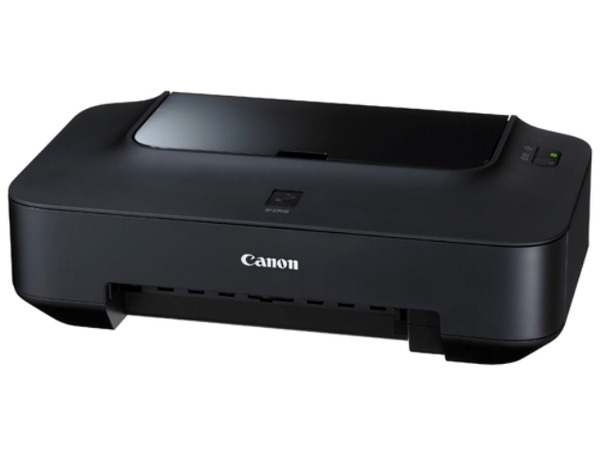
Printers get a lot of use. And because of the frequent use, printers will need plotter repairs from time to time. When a printer does break, it makes it abundantly clear just how important they are. Being stuck without a printer is frustrating to say the least.
Your printers manual is a valuable source of reference if your printer stops working. There will be many troubleshooting advice for issues that you can fix yourself. Printers manuals are written in easy to understand language so that the average person can understand them and execute the instructions. You will always be able to find out about any applicable warranties in the owners manual as well. Repair technicians who work for the manufacturer or suggested by the manufacturer will also be noted.
If you printer is too old to still be under warranty and there is no other solution for your problems inside of the printers manual, you will have to seek the services of printer technician on your own. One thing you should be looking for when searching for a place that provides printer repair in Sydney is a technician that does house calls. Some shops will send their repairman to your home.
There is an extra fee for this service but if you have tried dragging your printer somewhere you might find that this is one service that is worth the extra money. Of course this may not be something you are interested in if you have a very tiny printer that can easily be carried in your hands. But some people, especially those in business have large commercial printers and they can way upwards of two hundred pounds of more and of course in-home repairs would be very interesting to them. But everybody can appreciate not having to make a trip across town, or farther, so in-home repairs might be interesting to a variety of people.
After youve found a shop, make sure you pick a good repairman. Before you give the okay for the technician to begin the printer repairs in Sydney, you need to ask some questions about the length of time theyve been doing repairs as well as in education they may or may not have had. You need printer and you rely on it. So you need to make sure you are entrusting it to someone who is going to fix it and fix it right. Never hesitate to ask questions because you fear offending the repairman. Visit the link to get more information on hewlett packard printer service.
The Little Printer, as regular readers may recognize, has been one of my favorite topics over the last several years (for the latest, see "Go, Go, Go Little Printer"). Its creative inspiration and success have fit very nicely with "Jim Lyons Observations" and one of my overall themes, that printing is only as old and tired as we wish to make it, and there are signs of life, if not wherever one looks, at least in selective locations.
This morning BERG Cloud, the company behind Little Printer, had an email waiting for me in my inbox,the contents of which are also available on the web. (See "BERG Raises $1.3m Funding Round and Announces Public Launchof BERG Cloud"). And I love their press releases sub-head: "We’re taking funding to make the technology, services and design thinking behind Little Printer available to everyone."
While the most part I agree with the bloggers about mass confusion and unclear semantics overriding common sense in many of the arguments, some of the growing number of comments to the WhatTheyThink post have me thinking and reflecting, too.
During my career working at HP, I was around for the emergence of the "printing pie" chart that has come to be famous as the "one-slide strategy presentation" still commonly used by many in the industry. The idea of the chart, in its many variations, is to show todays digital printing volumes, based on pages or other metrics, as a relatively small slice of the overall (digital plus analog) print universe. Make no mistake, at the very highest level, that "pie" is a tool to describe the vast opportunity that exists, 15 years ago or today, in converting analog to digital pages.
While we see many tactical implementations, whether by Company A or Company B, or division X or division Y of Company H, the underlying goal is generally the same. In the biggest of all pictures, all printing is connected, from commercial print on the high end to simple pen-and-paper and typewriters on the lowest end. Ask the latter -- did digital printing change your business? Did Royal and Smith Corona need to be concerned?
And of course in marketing and economics we also try to look beyond direct competition to substitute goods and services. What about "not printing"?
In last month’s Observations column (see “Observations: Memorable Hard Copy Advertising Taglines—Part One”), I explored some printer industry taglines, after being inspired by an article in Forbes magazine on the “25 greatest advertising taglines.” The list was the result of voting by a group of corporate CMOs, including Xerox’s Krista Carone, who shared further thoughts about some of her company’s greatest (and longest lasting) advertising achievements. The column just did not seem to offer enough space to go beyond Xerox, so in this second part of my “tagline” observations, I look at some advertising experiences with HP and our industry at large.
HP’s “Set Your Lasers On Stun” and Dalmatians
HPs Garage is perhaps the most enduring symbol of the "original" Silcon Valley company.
HP’s LaserJet celebrated its 25th anniversary last year (see, “Observations: 25 years of the LaserJet”) and has certainly earned a role in the “product Hall of Fame,” for the printer industry and for products and marketing in general. But what about advertising? Some long-time HP employees recall an early ad, put together with Microsoft, touting the crisp, clean laser-printed copy available by combining the mid-1980 wonders of Microsoft Word (pre-Windows) with the new HP LaserJet. The ad carried the tagline, “Set your lasers on stun,” and while that line did not endure, it was a favorite with Star Trek fans. (I admit to not being a Trekkie, so I took a few years to make the association to one of Captain James Kirk’s favorite lines, “Set your phasers on stun.”)
And it was just a few years later, with the advent of new LaserJet models around the beginning of the 1990’s, when HP seemingly struck gold with the “Dalmatians” theme to advertise its new LaserJet printers. The theme was a natural, with the lovable black-and-white-spotted dogs featured in print and television ads associated with the latest and greatest monochrome-only printers of the day.
Ask The Experts
As last month’s interview with Xerox’s Carone pointed out, there are “taglines” per se, and then there are other advertising-industry descriptors for other themes. For example, Xerox’s successful “Document Company” phrase was never a tagline but a “signature statement.” So at the risk of over-simplifying, how did these two HP themes size up? While they are warmly remembered by insiders, neither has stood the test of time in the minds of the public, as HP continues to roll out new themes and taglines on a regular basis—see, for example, this year’s “Let’s Do Amazing” effort (see illustration below).Carone’s wisdom on what makes for “great” or at least memorable taglines included “an ability to transcend generations and markets.” She explained that they tend to strike a societal chord, which in turn, gives them long-term staying power and relevance. As mentioned, the Star Trek-themed “stun” ads were not meant to transcend generations but were quite focused on a techy (and trekkie) early-adopter segment, very important in the early days of a new product. But HP rolled out the Dalmatian theme to appeal to a much broader and more mainstream audience, five years following the first LaserJet printers, and the firm may have missed the opportunity for that theme to live on longer than it did.
Branding experts Lynn Parker and F. Joseph LePla, in their 2002 book “Integrated Branding,” discuss the importance of “hanging in there” with brand-related motifs and images. They cite HP’s Dalmatians campaign as a good example of not following their advice that “associations must be used for the life of the brand,” even recalling an instance that brought this example literally very close to home for me. Parker and LePla write, “Local schoolchildren in Boise, Idaho, were asked to do advertisements for Hewlett-Packard’s LaserJet printers as a school project. Even though it had been several years since HP’s LaserJet brand had featured Dalmatian dogs in its advertising campaign, most of the kids drew Dalmatians in their ads. Dalmatians had obviously become a valuable association for HP that implied professional-quality printing. However, that value was never leveraged as a lasting part of the customer experience.” While the authors’ observation sheds light on the importance of patience and consistency in marketing, does it also, give us possible insight into where HP was getting its ad ideas. But surely those school kids were not really creating the ads … were they?
YouTube Experiment
Integrated campaigns aside, the Forbes piece on best taglines highlighted memorable TV commercials, and as we are trying to recollect and/or document the memorable ones from our industry, why not query that repository of seemingly all things video, YouTube? My first search, for “Dalmatian commercial” yields a selection of ads, mostly for, you guessed it, Budweiser and Miller beer spots, with nary an HP entry in sight. I then tried a more generic search by simply entering “printer commercial” into YouTube’s search field, and came up with some interesting (if not exactly inspiring) choices. I will leave it to my readers to sample some of the clips on their own, in the privacy of their own cubicles or homes (yes, some of the examples are a bit risqué), but suffice it to say that the available evidence leads one to conclude the printer industry is still probably searching for its first true “killer ad!”
If your Dell 5100cn or 5110cn is having certain print quality issues you may need to replace one or more developers. This video covers the following part numbers: M6091, G6593, M6090, H6682. To order these parts please use the links bellow (these work on 5100 and 5110)





.jpg)


